Posts

Showing posts with the label X-ray for food inspection

Improving Food Safety with X-Ray Inspection Systems

  Did you know that nearly 75 food recalls were reported in Australia in 2022?  ( https://www.foodstandards.gov.au/industry/foodrecalls/recallstats/pages/default.aspx ) Yes, that’s true. While there are several reasons for such recalls, foreign material contamination is a prominent one. That is why product inspection proves to be an indispensable part of the food industry. Are you wondering how to detect harmful contaminants and ensure the safety of food items? In that case, leveraging  x-ray for food inspection  is a smart move. Read on to explore more details about these systems. Let’s dive in!   Why Invest in the Food X-ray Inspection Systems?   ·         Quality Assurance In your production line, contamination can happen at any time. The presence of impurities or contaminants like metal, plastic, glass, or rubber can affect the quality of food and may pose health risks for individuals. However, leveraging the...
What steps can you take to ensure optimum food safety: Let us explore!

Image
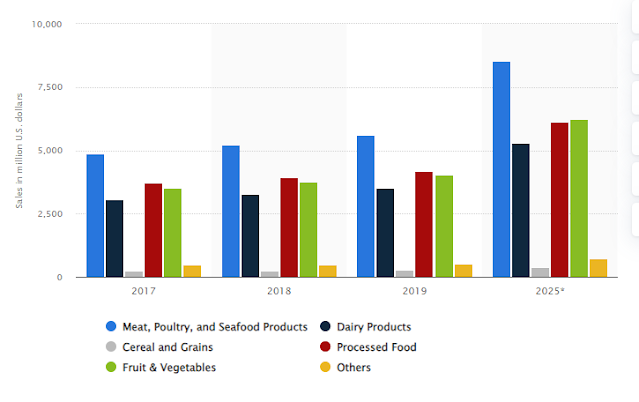
Food safety is not something consumers have to worry about all the time: Thanks to the regulations put in place by governments. However, the story for food producers or packagers is different. Food manufacturing companies adhere to the most stringent food safety practices to ensure their product matches all safety standards and is safe for consumption. Using the right machinery for the job goes a long way in simplifying this critical process. With various industries around the world ramping up the use of professional-grade food testing machinery, early adopters will benefit the most. The global food safety testing market by category. (Source: https://www.statista.com/statistics/1286148/global-food-safety-testing-market-by-food-type/ )   Need for food safety standards: Everyone agrees that we should have the right to obtain and consume nutritious and safe food. To ensure adequate safety standards, the adoption of testing machinery like X-ray scanners is becoming mainstream s...

Prevent Food Contamination with Metal Detectors

Image
  It’s a fact that food safety is a crucial concern for producers as well as consumers. You may think that all your food products are clean, but even a tiny amount of particulate or metal traces can easily contaminate the product, which can be hazardous to health. Besides, that can also greatly affect your brand reputation. But fortunately, such issues can be avoided by using innovative food processing metal detectors. These devices can detect the presence of metal before the packaging processes, ensuring proper food safety. Let’s have a look at some reasons to use a metal detector or an x ray for food inspection in a food manufacturing business.   Reasons To Use a Metal Detector ·         Identifying small metal particles that are shed due to the daily usage of the food processing equipment can only be done through a metal detector. Manual quality assurance checks may not be able to detect such small debris or fragments. You can also i...

How does a food inspection X-Ray machine work?

Image
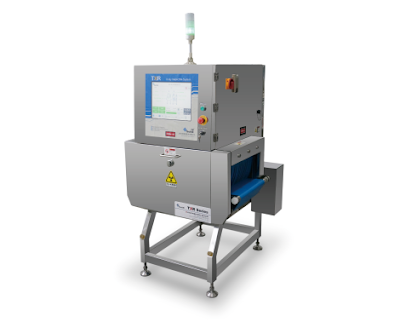
  Machines using x-ray for food inspection scan food products and detect any foreign objects or contaminants that may be inside. The X-rays pass through the food, creating a digital image that can be analysed by the machine's software to identify and flag any potential issues. The machine can also be programmed to automatically reject contaminated products, ensuring that only safe food items reach the consumer. The level of radiation used in these machines is typically low and safe for both the food and the operator.   Key Features of Food X-Ray Machines A machine using x-ray for food inspection typically has the following features: ●       High sensitivity to detect contaminants such as metal, stone, bone, glass, and plastic ●       Ability to inspect packaged or bulk products ●       Real-time inspection capabilities ●       Ability to differentiate between foo...

The Most Common Application of Load Cells

Image
When it comes to measuring weights, load cells are one of the most commonly used tools. From measuring small objects like needles to bigger ones such as drilling machines, the load cells prove to be beneficial. That is why there is a growing demand for  load cells in Australia  in diverse industries. Here are some of the common applications of load cells. Let's take a look.   ·         Food Processing  One of the popular applications of load cells is in the food processing sector. It helps in effectively and accurately measuring the different ingredients. Moreover, it also finds use in properly distributing products during packaging.    Scales When it is about the applications of load cells, scales are a very common application. The load cells are used in a variety of scales. It includes bathroom scales, kitchen scales, hopper scales, industrial scales, bench scales, conveyor scales, and more. In most of t...

Understanding Food X-Ray Inspection Systems

Image
  Food Inspection and Quality Control form a significant part of every food processing and manufacturing business. The authorities for food standards set strict guidelines for packaged food manufacturers which incorporate the principles of Hazard Analysis and Critical Control Points (HACCP). This makes the inspection of food at every stage of processing, a critical task to maintain high quality and regulatory compliance. With the advent of technology, many different methods have emerged like magnetic imaging, optical cameras, metal detectors, ultrasound, X-Ray, etc. One of the most prominent methods of food inspection is through Food X-Ray inspection systems. Let us discuss this in detail.   X-Ray Inspection Systems: The X-Ray food inspection systems have shown tremendous results with enhanced detection and varied application on different kinds of products like Fresh Produce, Packaged Foods, Pharmaceuticals, etc. X-Ray for food inspection is safe, reliable, and easy to...